Finding Her Way: How Mentorship Shaped Bianca's Path from First-Generation Student to Environmental Technician
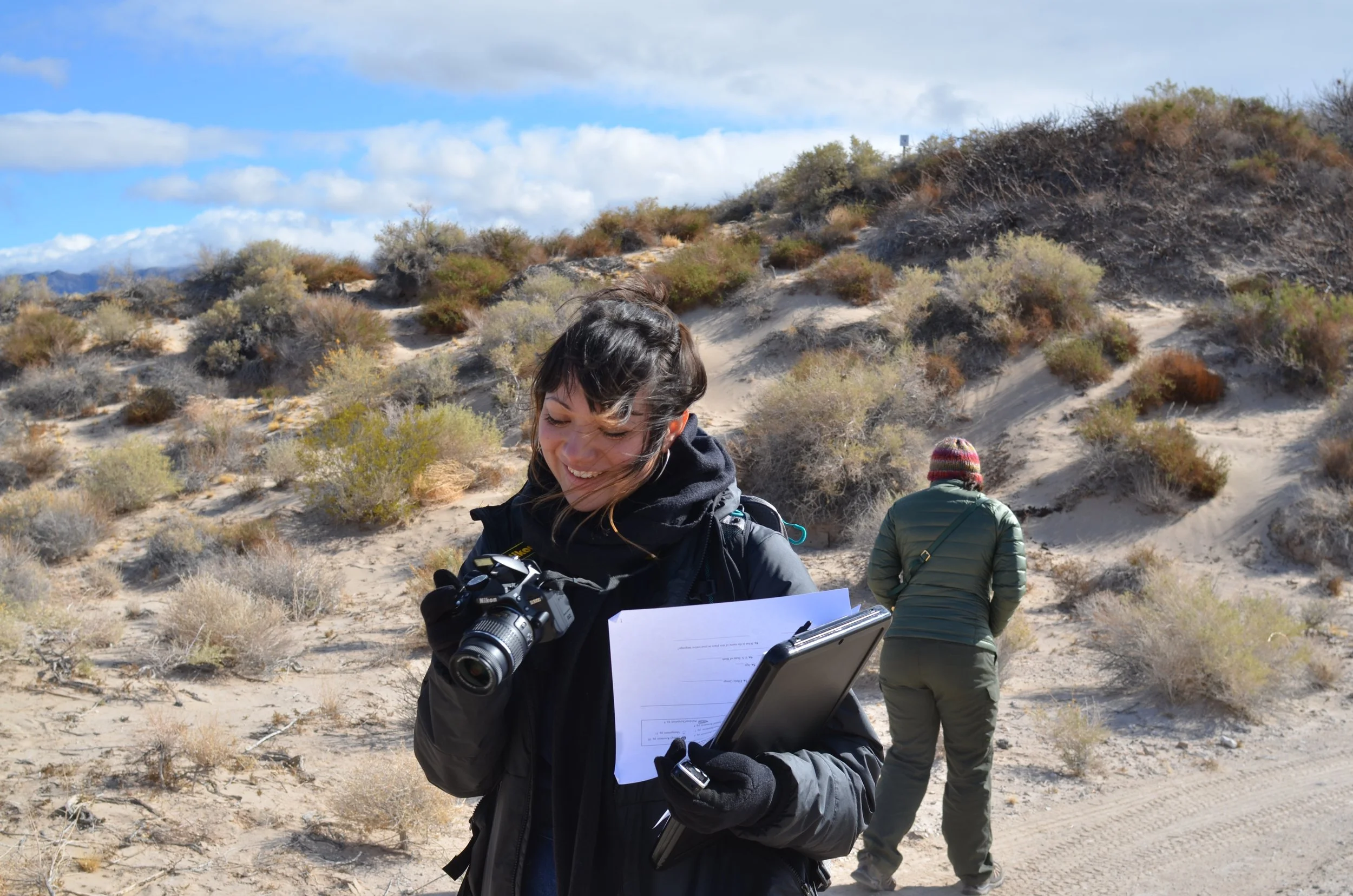
There's a moment Bianca Eguino Uribe still returns to when she talks about her first fieldwork trip: standing nervously at the edge of a research team full of PhD scholars and National Park Service staff, ready to carry supplies and stay quiet. Instead, someone handed her a tape recorder and asked her to help interview community members. That someone was Dr. Richard Stoffle, and that small act of trust would become one of many turning points in a journey defined, again and again, by the people who believed in Bianca before she fully believed in herself.
An Unexpected Beginning
Bianca didn't arrive at anthropology in a straight line. As a first-generation college student and first-generation U.S. citizen, she entered college with a completely different plan, she wanted to work in film. But the nerves that came with film projects pushed her to look elsewhere. She found early comfort in art history, which kept her in the classroom but opened her eyes to how differently stories get told depending on who's telling them. Then anthropology pulled her outdoors, into experiential learning, and she found something she didn't know she'd been looking for: a way to learn by living alongside the people and questions she was studying.
It was a Principles of Archaeology class during her junior year and the professor who taught it, Dr. Lars Fogelin — that first made her wonder if this could be more than an academic interest. "It was just the way the class was taught," she recalls, "and the respect for material culture and community the topic and the professor had that really got me into the idea of having this as a career."
That spark needed people to fan it into something real. Over the next several years, three mentors would do exactly that.
Dr. Janelle Lamoreaux: Building Confidence, One Opportunity at a Time
When Bianca was invited into the inaugural cohort of Dr. Janelle Lamoreaux's CARE Lab, she remembers feeling proud and acutely aware of her own luck. She had never pursued an extracurricular project before. Dr. Lamoreaux changed that, walking her through how to get a research project off the ground, how to collaborate with peers, and how to stand in front of a room and present findings.
It was Dr. Lamoreaux who pushed her toward university showcases and academic conferences — experiences Bianca says taught her to summarize complex research clearly and speak with authority about her own work. And it was Dr. Lamoreaux's steady encouragement that planted an idea Bianca hadn't originally had for herself: graduate school. "She was always very supportive but also keen on getting us to apply ourselves," Bianca says. That support gave her the confidence to apply to Northern Arizona University.
Dr. Richard Stoffle: Trust That Expanded Her World
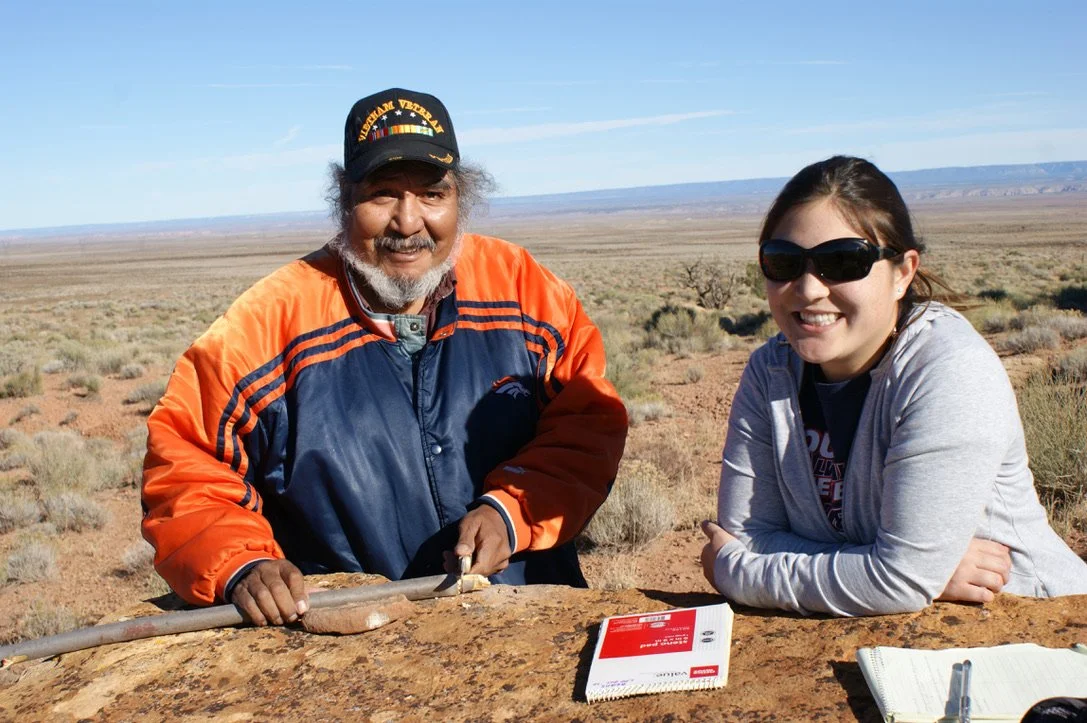
If Dr. Lamoreaux built her confidence in the classroom and at the podium, Dr. Richard Stoffle expanded what Bianca thought her career could even look like. Through BARA, she joined a research team working alongside Native Nations for the first time. This was a profound shift from the western academic frameworks she'd known. Under his mentorship, she began to understand how history informs the knowledge communities hold today, and how anthropology itself has evolved to center Indigenous perspectives, not just as a research method, but as a practice of relationship-building and respect.
She remembers being nervous on that first trip, trying to hang back and simply observe. Dr. Stoffle didn't let her. He asked her questions throughout the process to make sure she understood what was happening around her, and he encouraged her to trust her own instincts. By the second trip, working with the Acoma Pueblo, Bianca found herself more confident, more social, more willing to engage directly with ethnographers, Acoma representatives, and Park Service staff alike.
Her bilingual skills in English and Spanish became an unexpected bridge during that work including a memorable moment with an Acoma representative who wanted to practice his Spanish with her. What started as language practice turned into a conversation about shared traditions in food and celebration, the kind of connection that deepens both a research project and a person.
Dr. Kathleen Van Vlack: Long Lasting Mentorship and Teamwork
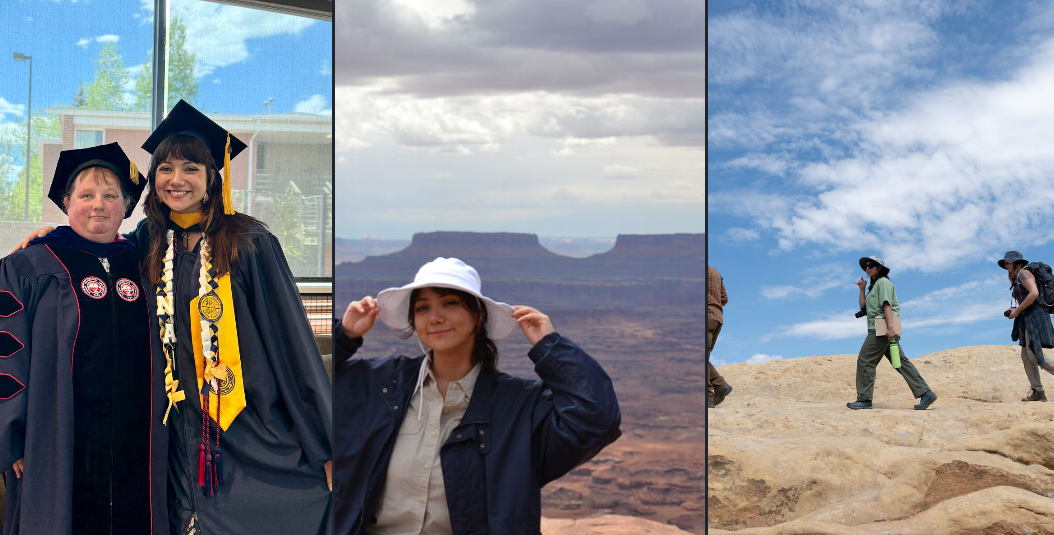
Bianca's mentorship continued into the next phase of her academic journey at Northern Arizona University in Flagstaff, where she earned her master’s degree in applied Anthropology under the guidance of her thesis chair, Dr. Kathleen Van Vlack, Professor of Applied Indigenous Studies and research associate with Applied Heritage and Resource Solutions. Facing the added challenge of relieving her imposter syndrome while in school and completing her master’s program, Bianca would begin to stress before confiding in Dr. Van Vlack. As two students of Dr. Richard Stoffle, the two had known and worked with one another since Bianca’s introduction to BARA and ethnographic work. Now, both managing a new school and environment, the two would connect greatly and work together successfully.
“She said she was happy to have me as a student, teammate, and friend during my hooding ceremony” Bianca says, “and that meant a lot because I really couldn’t have done it without her.” Dr. Van Vlack’s trust in Bianca helped her realize her academic potential, by continuously encouraging Bianca’s success in education, and offering her a guided path to success.
The Lessons That Outlasted the Classroom
Looking back, Bianca doesn't describe her growth as a single dramatic turning point, but as a series of small ones. Each mentor asking one more question, offering one more opportunity, extending one more bit of trust than she expected. She credits this style of mentorship — patient, unafraid to push, willing to explain the unwritten rules of academic life that no one had explained to her before — as exactly what helped her navigate a system she hadn't grown up around.
"It's important to be understanding and at times patient with students like me," she says, "not coming to this idea that everyone understands the route through college... but that they are experiencing things one step at a time."
Carrying Mentorship Forward
Today, Bianca is preparing to start a new role as an Environmental Technician for the Pascua Yaqui Nation in Tucson, AZ where she'll help write environmental reports shaped by conversations with community members. This work is rooted in the same values Dr. Stoffle modeled for her years earlier: listening first, and understanding a community's history before ever asking it a question.
She hopes to carry the same open, team-based approach to mentorship into her own career, staying collaborative and encouraging others the way she was encouraged. Her advice to students who don't yet see themselves as researchers or scholars is simple, and it's the same advice she was once given herself: "Just try it out. If you don't like it, it's not forever."
And if she could say one more thing publicly, to the mentor who handed a nervous first-year researcher a tape recorder and refused to let her stay in the background?
"I would like to thank Dr. Stoffle for his continued support and encouragement. I would not be where I am today without you... You didn't know me, and still you welcomed me, and I feel so, so special to be on this team still today."
Mentorship & Academic Engagement
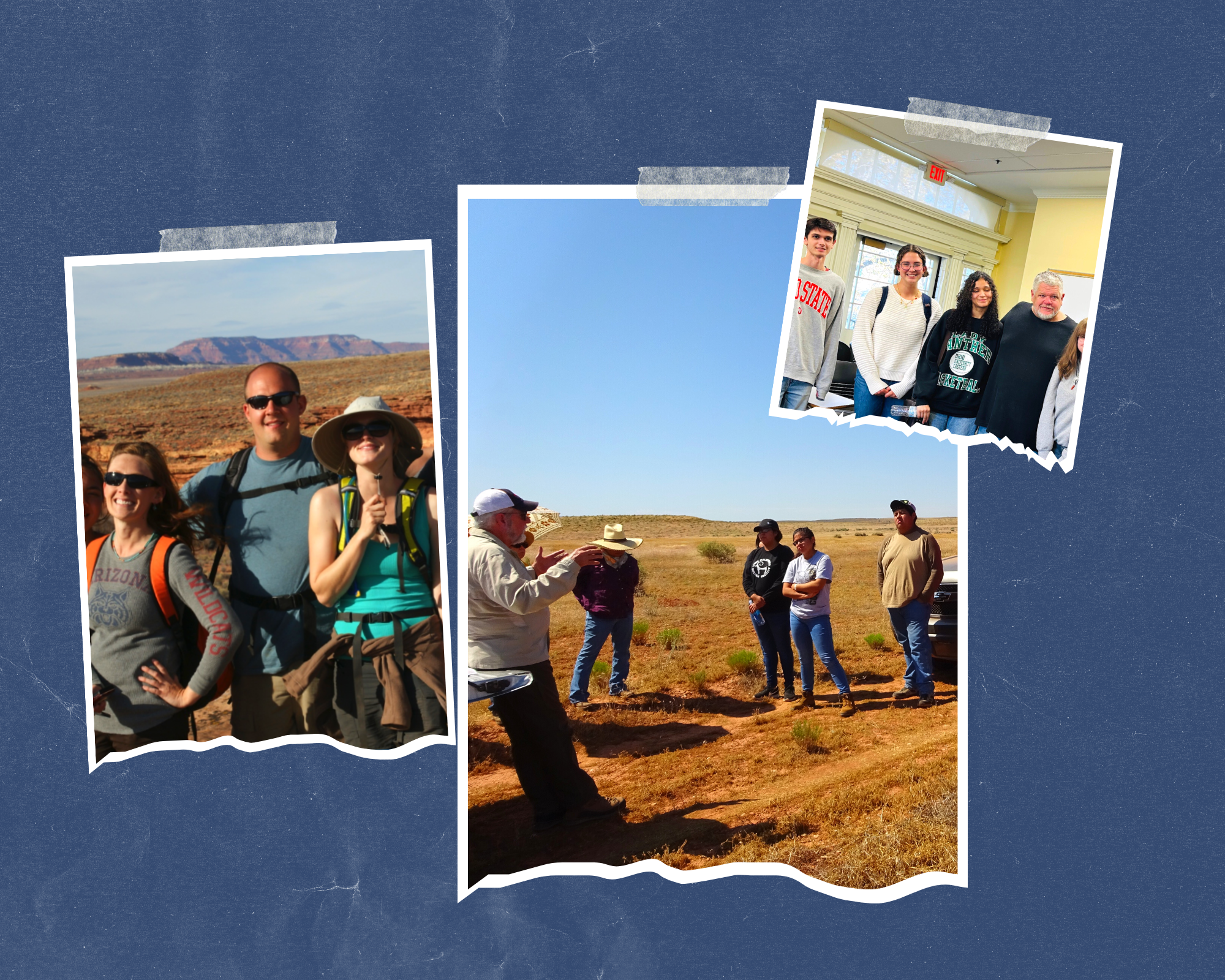
At Applied Heritage & Resource Solutions, we are deeply committed to fostering the next generation of scholars and practitioners in applied anthropology, heritage management, and environmental research. Our team provides one-on-one mentorship to students—guiding them through dissertation development, research design, and professional skill-building. We actively support student participation in national and international conferences, encouraging presentation of original research and engagement with the broader professional community. Through this hands-on approach, we aim to cultivate confident, capable leaders who bridge academic insight with real-world impact. All of our projects involve the training and mentoring of students from around the world.
“My introduction to conferences and presentations was taken one step at a time with clear guidance from my professor and team. These collaborative projects introduced me to a different, more trusting group interaction process than what I had experienced within the classroom, as I worked alongside those I grew to know and those with similar situations to that of myself. ”